Chapter 2: The Diterpene Story
Chapter 2: The Diterpene Story
Part I: The Molecules in Your Cup
It was a Tuesday evening in 2019, and I was sitting cross-legged on the floor of my apartment in Zaragoza, surrounded by printed papers and cold coffee — filtered, as it happens, though that detail wouldn’t become ironic until later. I was working my way through a stack of epidemiology papers from the 1980s and early 1990s, most of them Scandinavian, most of them asking the same stubborn question: why did boiled coffee seem to raise cholesterol?
The paper that stopped me was from 1983, a Norwegian study out of Tromsø. The researchers had surveyed thousands of people about their coffee habits and measured their serum cholesterol. The correlation was clear and dose-dependent: the more boiled coffee people drank, the higher their cholesterol. But here was the twist — people who drank the same amount of filtered coffee showed no such effect. Same beans. Same caffeine. Same country. Different cholesterol levels.
I remember putting the paper down on my knee and staring at the wall. If the caffeine wasn’t doing it, and the chlorogenic acids weren’t doing it, then something in the brewing method was creating a molecule — or removing one — that mattered. The filter paper was catching something. But what?
It would take the scientific community nearly two decades to fully answer that question. And the answer came down to two molecules, nearly identical twins separated by a single chemical bond, hiding in the oily fraction of every coffee bean on earth.
This is their story.
Meet Cafestol and Kahweol
If you’ve ever noticed a slight oily sheen on the surface of a cup of French press coffee, or watched the way Turkish coffee leaves a thick, almost silky residue at the bottom of the cup, you’ve already met these molecules — you just didn’t know their names.
Cafestol and kahweol are diterpenes, a class of compounds built from four isoprene units arranged into a characteristic ring structure. They belong to the broader family of terpenoids, which includes everything from the menthol in mint to the taxol used in chemotherapy. But cafestol and kahweol are rather special among terpenoids, because they carry a furan ring — a five-membered ring containing an oxygen atom — fused to their main structure. This furan ring, as we’ll see, turns out to be critically important for how these molecules interact with biological receptors.
Let me introduce them properly.
Cafestol has the molecular formula C₂₀H₂₈O₃ and a molecular weight of 316.4 daltons. It’s a white crystalline compound when purified, though you’d never see it that way in your cup. Its structure features that characteristic furan ring, along with a hydroxyl group (-OH) that makes it partially soluble in water but much more at home in lipids — in fats and oils. This is why cafestol lives in the coffee oil, the lipid fraction that floats on top of unfiltered brews and gets trapped by paper filters.
Kahweol is cafestol’s near-twin. Its molecular formula is C₂₀H₂₆O₃, with a molecular weight of 314.4 daltons — just two daltons lighter. When I first looked at their structures side by side, I had to squint to find the difference. It comes down to a single double bond at the Δ1,2 position in kahweol’s structure. That’s it. One extra double bond. Two fewer hydrogen atoms. Everything else — the furan ring, the hydroxyl group, the overall three-dimensional shape — is nearly identical.
I remember thinking: how much can one double bond really matter?
The answer, as I would learn over the next several years, is: enormously.
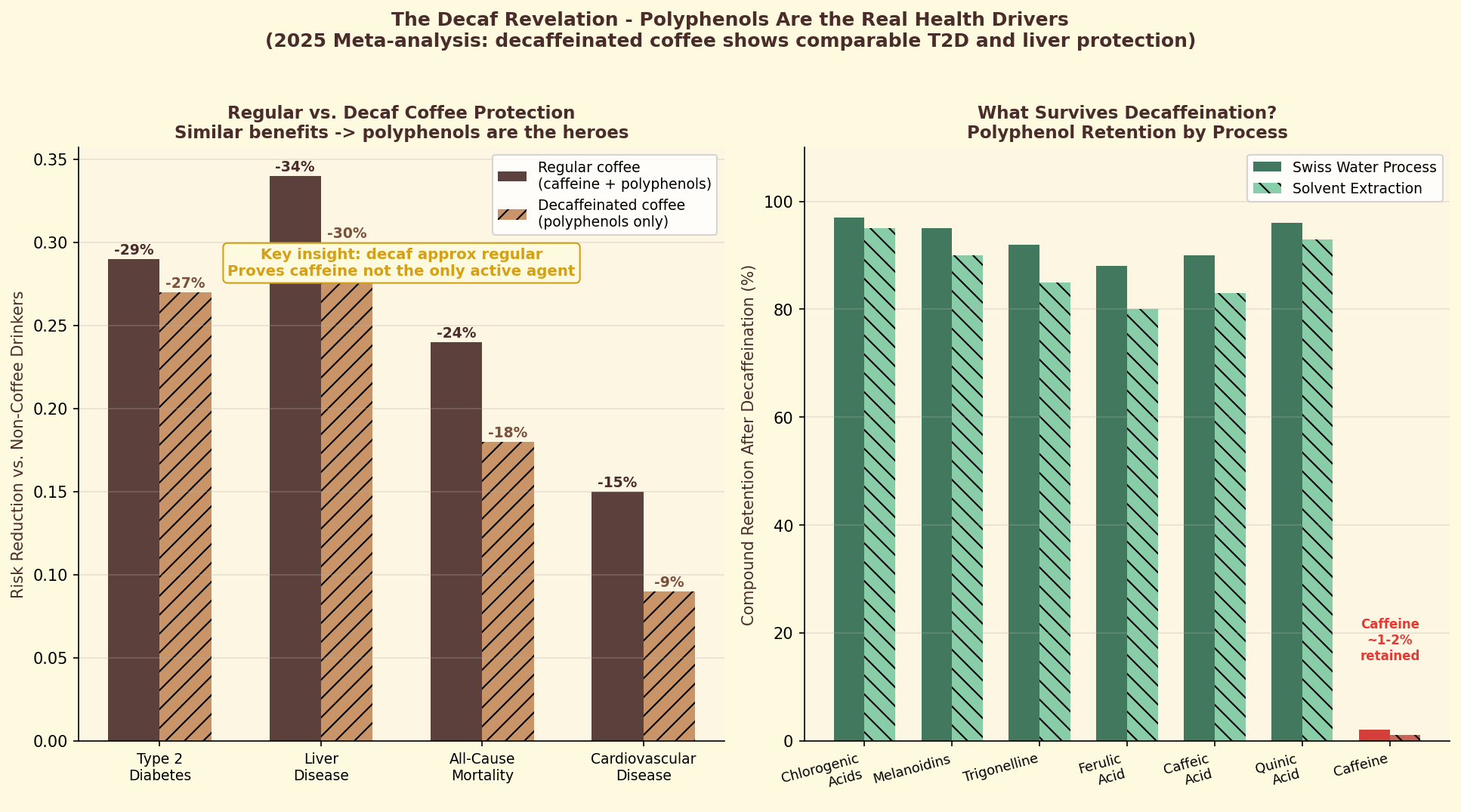
Hold one of those oily French press cups up to the light sometime. You can see them — not as individual molecules, of course, but as that faint iridescent film on the surface, catching the light like a soap bubble. That sheen is your diterpenes, floating exactly where evolution put them: in the oil. Both cafestol and kahweol are found in their highest concentrations in Coffea arabica beans, the species that accounts for roughly 60-70% of global coffee production. They exist primarily as fatty acid esters in the coffee oil — meaning they’re bound to fatty acids like palmitic acid, and only released during brewing when hot water extracts them from the ground beans. The concentration depends on the bean variety, the roasting level, and critically, the brewing method.
And this brings us back to that Norwegian study, and to the question that had me staring at my wall.
The Cholesterol Connection
In the early 1990s, a Dutch research group led by Martijn Katan at Wageningen University set out to isolate exactly what in boiled coffee was raising cholesterol. Through a series of elegant experiments — fractionating coffee into its components and testing each fraction — they identified the lipid fraction as the culprit. And within that lipid fraction, they zeroed in on cafestol.
What they found was remarkable. Cafestol is, as far as research has been able to determine, the most potent dietary cholesterol-raising compound known in the human diet. Not saturated fat. Not dietary cholesterol itself. Cafestol.
Studies indicate that regular consumption of unfiltered coffee raises LDL cholesterol by approximately 0.13 to 0.33 mmol/L, depending on the amount consumed and the brewing method. To put that in perspective, that’s a clinically meaningful shift — enough to nudge someone from a borderline cholesterol reading into an elevated one, enough to show up in population-level cardiovascular risk calculations.
How does cafestol actually raise cholesterol? Researchers gradually traced the mechanism to bile acid metabolism. Your liver normally converts cholesterol into bile acids and flushes them out. Cafestol interferes with that process. It binds to a receptor in liver cells called FXR (farnesoid X receptor), which acts as a master switch for bile acid production. When cafestol jams this switch, your liver converts less cholesterol into bile acids. The excess cholesterol builds up in your blood instead. Think of it like blocking a drain — the water has nowhere to go, so the level rises. I’ll show you exactly how cafestol fits into the FXR binding pocket in Chapter 4, using computational tools. For now, the key takeaway is striking: a tiny molecule from your coffee cup can reach a receptor in your liver and rewire your cholesterol processing.
Now consider the scale. An estimated 500 million people worldwide drink unfiltered coffee as their primary preparation method. Turkish coffee across the Middle East, North Africa, and southeastern Europe. Scandinavian boiled coffee — kokekaffe — still widely consumed in Norway, Sweden, and Finland. French press, which has surged in popularity globally. Greek coffee, cowboy coffee, and dozens of regional variations that share one thing in common: no paper filter standing between the coffee oils and your cup.
Every one of those people is consuming cafestol and kahweol with every cup. A typical serving of French press coffee delivers roughly 3 to 6 milligrams of cafestol. A cup of filtered drip coffee? Research suggests it contains almost none — the paper filter removes the vast majority of the lipid fraction, diterpenes included.
This is what those Norwegian researchers had stumbled onto in 1983, even though they didn’t have the molecular explanation yet. The paper filter wasn’t just a convenience. It was a molecular gatekeeper.
Coffee Break: The Scandinavian Coffee Paradox
Here’s something that puzzled epidemiologists for years. Scandinavian countries — particularly Finland, Norway, and Sweden — consistently rank among the highest per-capita coffee consumers in the world. Finland typically tops the list at over 12 kilograms of coffee per person per year. And traditionally, much of that coffee has been brewed by boiling — the kokekaffe method — which means high diterpene exposure.
So you might expect Scandinavians to have catastrophic rates of heart disease. But they don’t. Their cardiovascular outcomes are broadly comparable to, and in some cases better than, countries where filtered coffee dominates.
Why? The honest answer is that we don’t fully know. But research suggests several contributing factors. First, Scandinavian diets tend to be rich in omega-3 fatty acids from fish, which have well-documented cardiovascular benefits. Second, coffee contains hundreds of other bioactive compounds — chlorogenic acids, trigonelline, melanoidins — many of which show cardioprotective properties in studies. It’s possible, even likely, that the net effect of coffee drinking depends on the entire molecular profile of the beverage, not just one or two compounds.
Third, and this fascinates me, there is evidence that Scandinavians may have partially adapted to boiled coffee over many generations. Certain gene variants (polymorphisms) involved in cholesterol processing appear more frequently in Nordic populations. The evidence is still emerging and somewhat speculative. But if true, it means centuries of boiled-coffee drinking may have nudged natural selection — a reminder that human biology and cultural habits co-evolve in ways that pure lab chemistry can miss.
The Scandinavian coffee paradox is a humbling reminder. Knowing what a molecule does in a test tube is not the same as knowing what it does inside a living person — someone with a particular diet, a unique set of genes, and a lifetime of habits.
One Double Bond Changes Everything
Let me return to that single double bond.
When I began my graduate work, I assumed cafestol and kahweol would behave more or less identically in biological systems. They’re so structurally similar that many early studies treated them as interchangeable, often reporting results for “cafestol and kahweol” as though they were a single entity. Some researchers used the shorthand “C+K” in their papers, lumping the two together.
But as the research matured through the 2000s and 2010s, a more nuanced picture emerged. That single double bond at the Δ1,2 position in kahweol — the only structural difference between the two molecules — creates subtle but meaningful differences in their three-dimensional shape, their electron distribution, and consequently, how they interact with biological targets.
This is what chemists call structure-activity relationship, or SAR — the principle that even tiny changes in a molecule’s structure can dramatically alter its biological activity. It’s one of the foundational concepts in pharmacology, and cafestol and kahweol provide a textbook illustration.
That extra double bond makes kahweol slightly more rigid and flat in one region of its structure. It also shifts the electron cloud around the furan ring — the oxygen-containing ring that research suggests is most important for binding to receptors. These are tiny changes. Imagine two house keys cut from the same blank. One has a single tooth filed down by half a millimeter. You wouldn’t notice by looking. But slide them into a lock, and one turns smoothly while the other catches. That’s the scale we’re talking about — fractions of an angstrom in bond angles, barely measurable shifts in electrical charge. At the molecular level, half a millimeter is a canyon.
The practical consequence? Studies indicate that kahweol shows somewhat greater anti-inflammatory potential than cafestol in several experimental models. In cell culture studies, kahweol has demonstrated the ability to modulate inflammatory signaling pathways — particularly NF-κB, a master regulator of inflammation — at concentrations where cafestol shows less activity. Research also suggests that kahweol may have somewhat different effects on certain liver enzymes involved in detoxification.
I want to be careful here, because much of this evidence comes from cell culture and animal studies, not from large-scale human trials. The difference between what a molecule does in a petri dish and what it does in a human body is vast and humbling — a point I’ll return to repeatedly in this book. But the direction of the evidence is consistent enough to suggest that cafestol and kahweol are not, in fact, interchangeable. They’re siblings, not twins. And that single double bond is the difference between them.
The furan ring itself deserves a moment of attention. This oxygen-containing ring is not unique to coffee diterpenes — furan rings appear in many natural products and pharmaceuticals. But the furan ring in cafestol and kahweol appears to be critical for their ability to interact with biological receptors. When researchers have tested modified versions of these molecules with altered or removed furan rings, much of the biological activity disappears. The furan ring seems to be a key part of the molecular “handshake” between these diterpenes and their target proteins.
In Chapter 4, I will show you exactly what this molecular handshake looks like using computational chemistry. You will see cafestol and kahweol nestled inside the binding pocket of FXR, and how that single double bond tilts kahweol just enough to change how strongly it grips the receptor. It is one of the most elegant results I have encountered in this research. And it is the kind of insight that simply was not possible before computers became powerful enough to simulate molecular interactions.
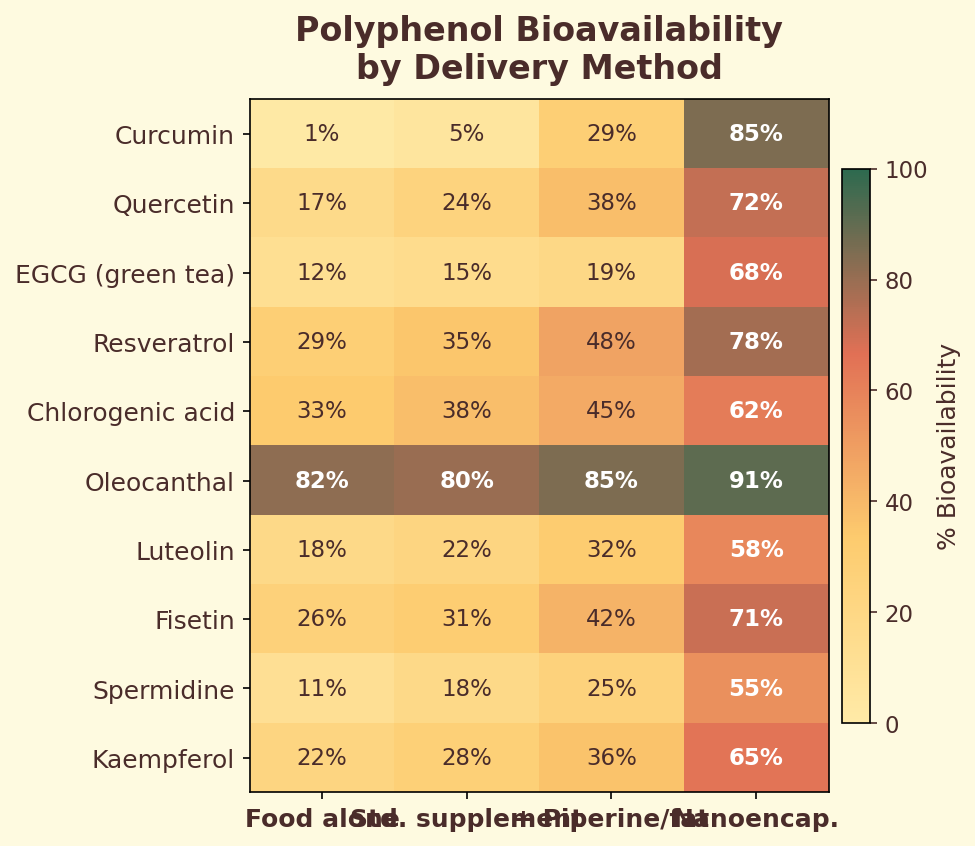
Figure 2.2a. Bioavailability heatmap: comparative oral bioavailability of major coffee polyphenols across delivery methods, from whole-bean brew to isolated supplement forms.
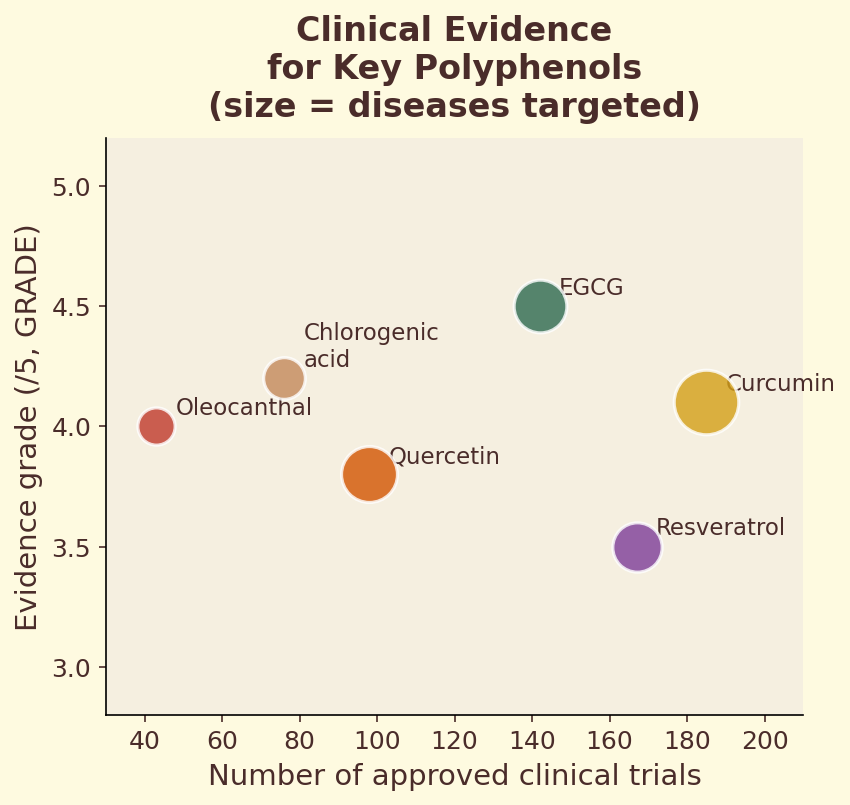
Figure 2.2b. Clinical evidence: summary of human intervention studies for key coffee polyphenols, showing effect sizes on oxidative stress and inflammatory biomarkers.
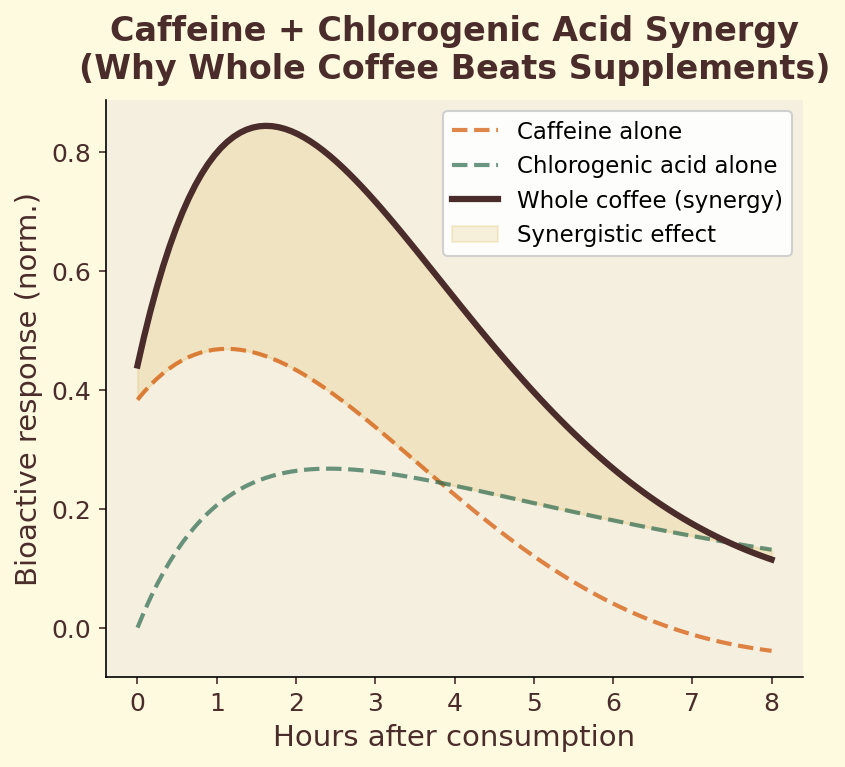
Figure 2.2c. Synergy in whole coffee: how caffeine and chlorogenic acids interact to enhance bioavailability beyond what either compound achieves in isolation.
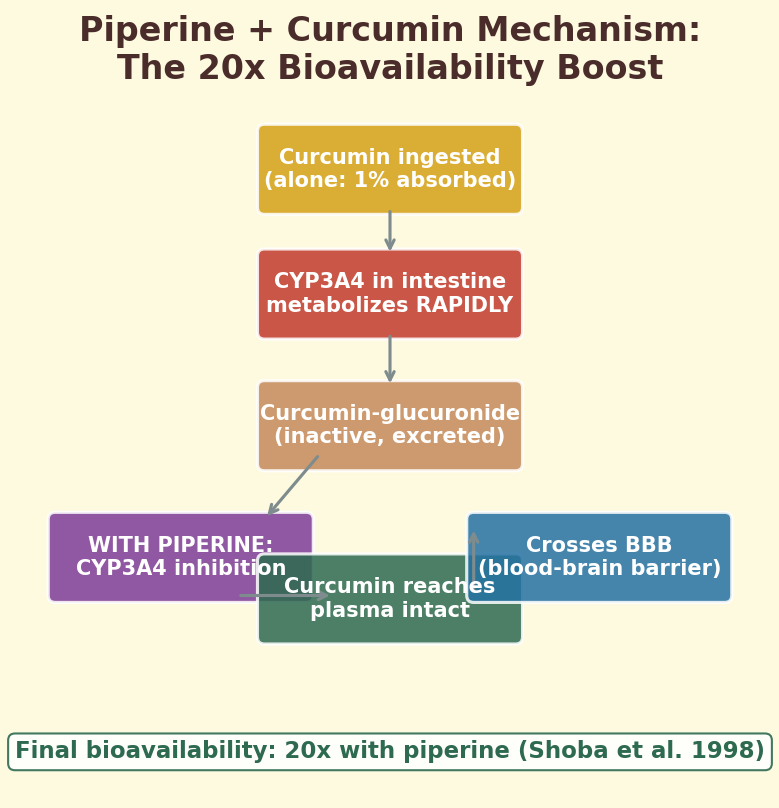
Figure 2.2d. Piperine-curcumin mechanism: the bioavailability enhancement principle that applies to polyphenol absorption, illustrating how co-administered compounds can inhibit Phase II metabolism.
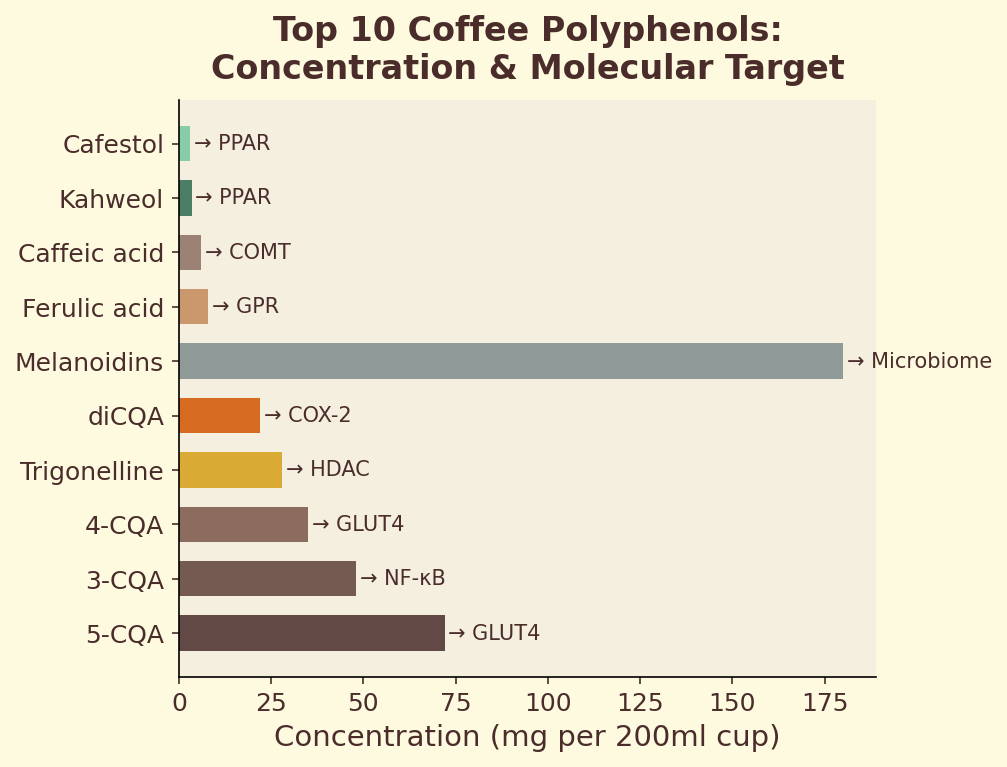
Figure 2.2e. Top 10 coffee polyphenols: molecular structures and their primary biological targets, from Nrf2 activation to NF-kB modulation.
But Wait — They’re Not All Bad
If you’ve been reading this chapter with a growing sense of alarm — I drink French press every morning, should I stop? — let me complicate the picture.
Because here’s the paradox at the heart of the diterpene story: the same molecules that raise your cholesterol may also protect your liver.
The evidence for this is substantial, though I need to emphasize that it comes primarily from laboratory studies — cell cultures and animal models — rather than from large-scale human clinical trials. With that caveat firmly in place, here’s what the research shows.
Both cafestol and kahweol demonstrate significant antioxidant activity. They can scavenge reactive oxygen species — the molecular troublemakers that damage DNA, proteins, and cell membranes when they accumulate. In cell culture studies, treatment with cafestol or kahweol reduces markers of oxidative stress in a dose-dependent manner.
Both molecules also show anti-inflammatory properties. Research suggests they can downregulate pro-inflammatory cytokines and modulate signaling pathways involved in chronic inflammation. This is particularly relevant because chronic low-grade inflammation is increasingly recognized as a driver of numerous diseases, from cardiovascular disease to neurodegeneration.
And then there’s the hepatoprotective effect — the liver protection. Multiple animal studies have shown that cafestol and kahweol can reduce liver damage caused by various toxins. They appear to activate the Nrf2 pathway, a cellular defense system that upregulates the production of protective enzymes. Research also suggests they may modulate phase I and phase II detoxification enzymes in ways that help the liver process harmful compounds more effectively.
Some studies have even explored potential anticancer properties. In laboratory settings, cafestol and kahweol have shown the ability to induce apoptosis (programmed cell death) in certain cancer cell lines and to inhibit angiogenesis (the formation of new blood vessels that tumors need to grow). I want to be absolutely clear: this does not mean coffee diterpenes treat or prevent cancer. The gap between killing cancer cells in a dish and treating cancer in a human being is enormous, and many compounds that look promising in cell culture never translate to clinical benefit. But the laboratory evidence is intriguing enough to warrant continued investigation.
So here we are, facing a genuine pharmacological paradox. Cafestol raises cholesterol — bad. Cafestol protects the liver — good. Kahweol reduces inflammation — good. Both are found in the same cup of coffee, doing all of these things simultaneously. I remember the moment this clicked for me — staring at contradictory results from two perfectly valid studies, one warning about diterpenes and one celebrating them, and thinking: they’re both right.
In pharmacology, we have a term for molecules like this: we call them “dirty drugs.” It sounds pejorative, but it’s actually a useful concept. A “clean” drug hits one target with high specificity — think of a modern biologic medication designed to block a single receptor. A “dirty” drug hits multiple targets, producing a constellation of effects, some beneficial and some not. Most natural products are dirty drugs. Most traditional medicines are dirty drugs. And coffee, with its hundreds of bioactive compounds, is perhaps the ultimate dirty drug.
Cafestol and kahweol are a microcosm of this complexity. They don’t do one thing. They do many things, to many targets, through many mechanisms, and the net effect on human health depends on context — your genes, your diet, your existing health status, the dose, and the duration of exposure. This is why the Scandinavian paradox exists. This is why simple headlines about coffee being “good” or “bad” for you are always, always insufficient.
Coffee Break: Robusta vs. Arabica
Not all coffee is created equal when it comes to diterpenes, and the difference between the two main commercial species — Coffea arabica and Coffea canephora (commonly called Robusta) — is striking.
Arabica beans contain both cafestol and kahweol in significant quantities. Kahweol, in fact, is sometimes used as a chemical marker to identify Arabica beans and detect adulteration with cheaper Robusta.
Robusta beans contain cafestol — roughly comparable amounts to Arabica — but have much lower levels of kahweol. Some analyses find only trace amounts, while others detect none at all. The reasons for this are genetic: the biosynthetic pathway that produces kahweol from its precursors appears to be much less active in Robusta.
What does this mean for your cup? If the emerging evidence about kahweol’s anti-inflammatory advantages is confirmed, then Arabica coffee may offer a slightly different diterpene profile than Robusta — one with a more balanced mix of the two molecules. But Robusta’s lower kahweol content also means that its cholesterol-raising effect is driven primarily by cafestol alone, without whatever moderating influence kahweol might provide.
For espresso lovers, there’s an additional wrinkle. Many espresso blends mix Arabica and Robusta beans, and espresso extraction — with its high pressure and short contact time — extracts diterpenes somewhat differently than immersion methods like French press. The diterpene profile in your espresso shot is, chemically speaking, a different animal than the profile in your French press. These are the kinds of nuances that get lost when we talk about “coffee” as though it were a single, uniform substance.
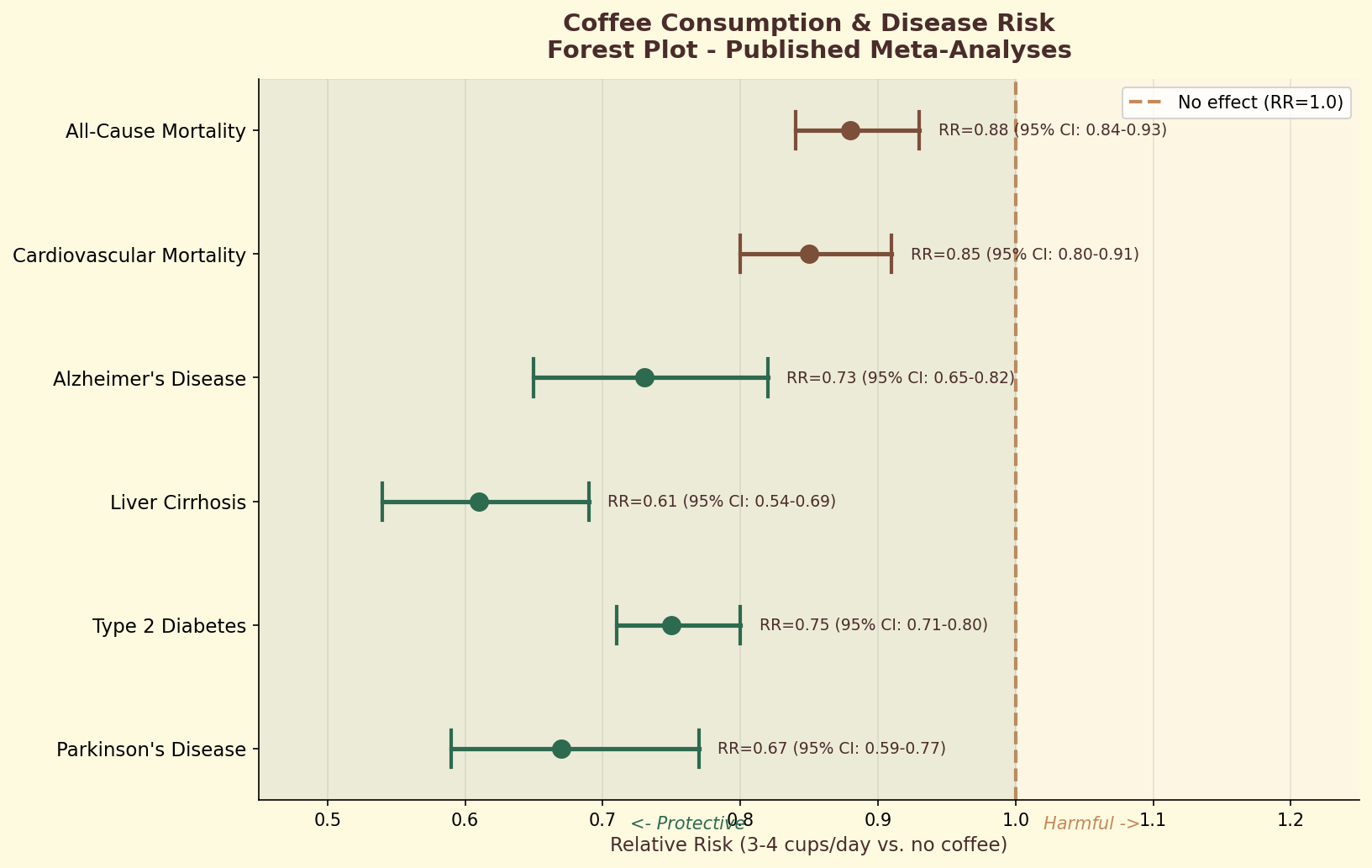
Figure 2.3. Coffee and health: the broad spectrum of epidemiological associations between coffee consumption and health outcomes, illustrating why diterpenes are just one piece of a much larger molecular puzzle.
Why Two Molecules Matter
I’ve spent this chapter telling you about two molecules that, at first glance, might seem like a niche topic — interesting perhaps to a chemist, but not obviously relevant to your morning routine. So let me explain why I think cafestol and kahweol deserve an entire chapter, and why they’re the foundation on which much of the rest of this book is built.
Cafestol and kahweol are, in miniature, the entire story of coffee science.
They show us that brewing method isn’t just a matter of taste preference — it’s a molecular choice with measurable physiological consequences. They demonstrate that structurally similar molecules can have meaningfully different biological effects. They illustrate the paradox of natural products that are simultaneously beneficial and harmful, depending on context. And they reveal the limits of traditional experimental methods.
That last point is crucial. Decades of wet-lab research — cell cultures, animal studies, clinical trials — have told us what cafestol and kahweol do. They raise cholesterol. They protect the liver. They modulate inflammation. We have a rich catalog of effects.
But the how has been slower to emerge. How, exactly, does cafestol bind to the FXR receptor to alter bile acid metabolism? How does that single double bond in kahweol change its interaction with NF-κB signaling proteins? Which specific atoms on these molecules make contact with which specific amino acids in their target proteins, and with what strength?
These are the questions that require computational tools — molecular docking, molecular dynamics simulations, structure-activity modeling — the tools that I’ll introduce in Chapters 4 and 5. And cafestol and kahweol are the perfect case study for those tools, precisely because we already have so much wet-lab data to validate against. When a molecular docking simulation predicts that cafestol binds to FXR with a certain affinity and orientation, we can check that prediction against decades of experimental evidence. When the simulation predicts that kahweol binds differently because of its double bond, we can ask whether that prediction is consistent with the observed differences in biological activity.
This is the bridge between Parts I and II of this book. The molecules you’re meeting now, in these early chapters, are the same molecules you’ll watch interact with proteins in atomic detail later. The chemistry doesn’t change. But the resolution does. It’s the difference between knowing that a key opens a lock and being able to see, atom by atom, how the teeth of the key engage the pins of the tumbler.
Let me bring this back to the practical, to the cup of coffee that may be sitting beside you as you read this.
If you brew with a paper filter — a standard drip machine, a pour-over, an AeroPress with a paper filter — the paper catches the coffee oils and, with them, the vast majority of cafestol and kahweol. Your cup contains almost none. From a diterpene perspective, your coffee is essentially “clean.”
If you brew with a French press, you’re looking at roughly 3 to 6 milligrams of cafestol per cup. A metal mesh filter doesn’t catch the oils. They pour right through into your cup, carrying the diterpenes with them. If you drink three or four cups a day, that adds up.
If you drink Turkish coffee, Scandinavian boiled coffee, or any preparation where the grounds steep freely in water without paper filtration, you’re in similar territory — potentially even higher, since some of these methods use finer grinds and longer contact times.
Espresso is an interesting middle case. The extraction is short, and espresso is typically consumed in small volumes, so the absolute amount of diterpenes per serving is moderate — generally less than French press but more than filtered drip.
None of this means you should panic about your French press. Remember the Scandinavian paradox. Remember that these same molecules show protective properties. Remember that coffee is not cafestol alone — it’s a complex matrix of hundreds of compounds, many of which appear to be beneficial.
But it does mean you’re making a molecular choice every time you choose a brewing method, whether you know it or not. And understanding that choice — understanding what’s in your cup and why it matters — is the first step toward a more informed relationship with this remarkable beverage.
But cafestol and kahweol are only two of fifteen bioactive compounds I tracked in my research. The next chapter introduces the rest of the cast — including one group of molecules that don’t even exist until you roast the bean, and another that nobody fully understands yet.
Your French press is still sitting there, full of questions.
Next: Chapter 3 — “Beyond Caffeine: The Full Molecular Cast”
What your filter is secretly removing from your coffee
You'll Need
- Paper filter pour-over
- French press
- Same coffee beans
- Grinder
- Kettle
- Two cups
Do This
- Grind 30g of the same beans at medium setting.
- Brew 15g as pour-over with paper filter.
- Brew 15g in French press (4 min steep).
- Taste side by side — note body, oiliness, and mouthfeel.
- Hold each cup to the light — notice the clarity difference.
What's Happening
Paper filters trap coffee oils containing cafestol and kahweol — the diterpenes from this chapter. The French press lets them through, giving a fuller body but also the compounds that can raise LDL cholesterol. What you taste as “richness” is partly lipid chemistry.
“Everything I’ve told you assumes one set of numbers. The truth is, they change dramatically depending on where your beans grew.”